
Ancient Greek: Knowledge or Ordeal?

By Eugenia Manolidou A response to the debate in Greece over who should learn Ancient Greek, how it should be taught, and what we risk losing when difficulty becomes a reason to restrict access. Within Greece’s academic and educational community, there is a debate about whether Ancient Greek should continue to be taught as a […]
Daedalus has found a new workshop

By Eugenia Manolidou Greece’s new supercomputer, Daedalus, has begun operating in Lavrio, a town southeast of Athens. Designed to process vast amounts of data and perform calculations requiring enormous computing power, it will support scientific research, healthcare, disaster prevention and response, and the development of Greek-language artificial intelligence models. This is a remarkable achievement for […]
The Greek Language: The Great Winner of the Nobel Prizes

By Eugenia Manolidou In this year’s Nobel announcements, among the names of the laureates and the descriptions of their discoveries, we encounter the Greek language. Anne Carson, awarded the Nobel Prize in Literature, has devoted much of her life to studying, translating and teaching Ancient Greek. In her work, Sappho, Greek tragedy and myth meet […]
The Future of the West Runs Through Greece

By Eugenia Manolidou It took the American Secretary of State, Marco Rubio, speaking from the Pnyx in Athens, to remind the modern world of something the Greeks have understood for two and a half thousand years: great ideas belong also to the generations yet to come. Rubio’s address, delivered against the backdrop of the Acropolis, […]
How Many Eyes Did Homer’s Cyclops Have?

By Eugenia Manolidou Everyone knows what a Cyclops looks like. From a child’s first encounter with Greek mythology to the most elaborate paintings and cinematic recreations, the creature is immediately recognisable by the single enormous eye set in the middle of his forehead. Polyphemus, the savage shepherd who traps Odysseus and his companions in his […]
Is It Time to Change How We Teach Ancient Greek?

By Eugenia Manolidou In recent years, young people have grown increasingly distant from classical studies. In my view, this tells us far more about the way Ancient Greek and Latin are taught than about any lack of curiosity among younger generations. The renewed attention surrounding the Odyssey has shown how powerfully people still respond to […]
Nolan’s Odyssey, Helen and Our Own Ithaca
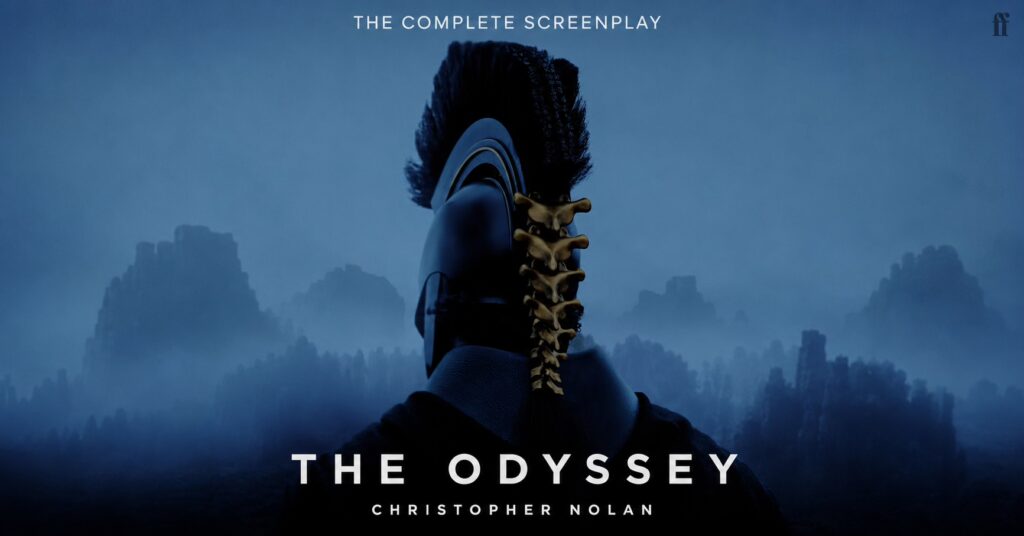
By Eugenia Manolidou As the Greek premiere of Christopher Nolan’s The Odyssey approaches, angry reactions from people who have not yet seen the film continue to multiply. The controversy has focused particularly on the casting of Lupita Nyong’o as Helen, prompting an international debate about the film’s casting choices. I admit that the choice surprised […]
Ancient Greek: The Language that Gave Birth to the Renaissance
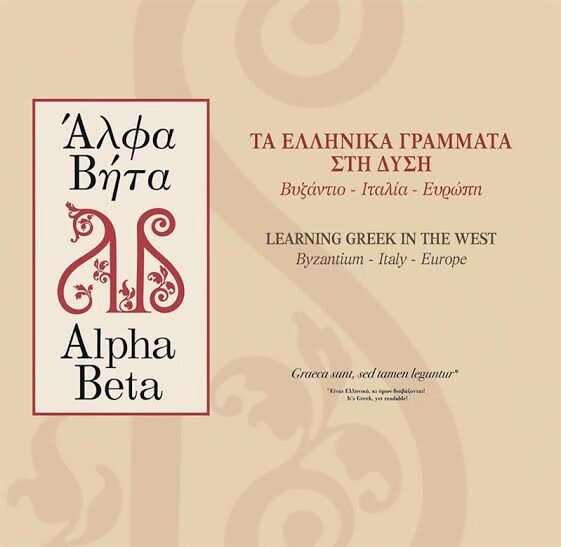
By Eugenia Manolidou “It is Greek; it cannot be read.” With the phrase Graeca sunt, non leguntur, scribes and scholars of the Latin West once expressed their helplessness before Greek passages they encountered in manuscripts but could not decipher. The exhibition of the Hellenic Parliament, “Alpha Beta: Learning Greek in the West. Byzantium – Italy […]
The Wisdom of the Greek Language in Medicine

By Eugenia Manolidou The advance of Artificial Intelligence into our daily lives is already transforming Medicine, offering new tools for diagnosis, research and the processing of knowledge. Yet there remains a core of medical practice that cannot be replaced: the relationship between doctor and patient. For this reason, the Greek language and Greek philosophy acquire […]
China in the Age of Algorithms Returns to Plato

By Eugenia Manolidou When a country with the economic and technological power, as well as the international reach, of China devotes institutions, academic energy and public attention to classical and humanistic studies, the significance of the event extends far beyond the boundaries of an academic conference. The 2nd World Conference of Classics, held in Athens […]