
Anthesteria and the Greek Carnival: A Timeless Tradition
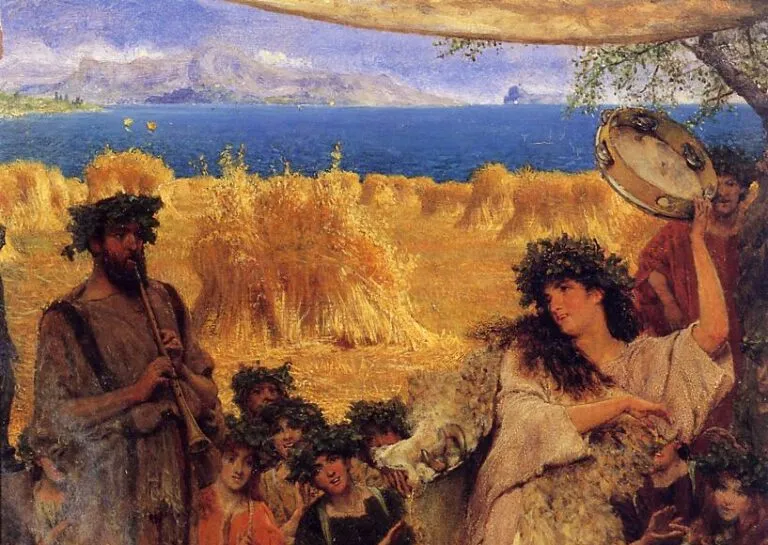
by Eugenia Manolidou The Greek Carnival, with its disguises, satirical songs, and Dionysian celebrations, has roots that go deep into history. The festival of Anthesteria, the Eleusinian Mysteries, and the worship of Dionysus shaped the carnival traditions that have survived to this day and are part of a long series of festivals and customs that […]
Ancient Greek Customs: The Carols of Spring and the March bracelet
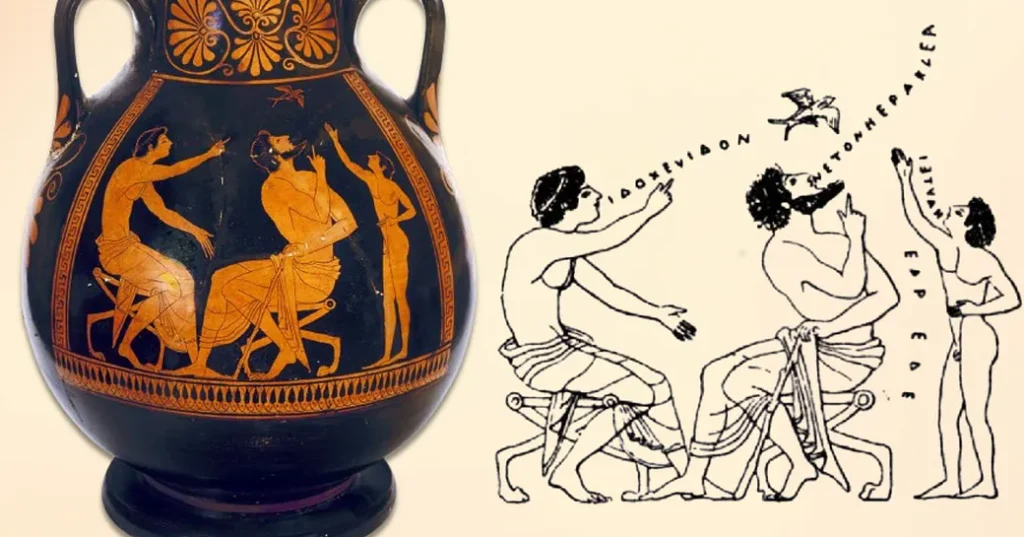
by Eugenia Manolidou The “Swallow Songs’“ and “Martis” (March bracelet) are two of the most characteristic spring customs in Greek folk culture, with roots dating back to antiquity. The Swallow Songs are known as the “Spring Carols,” songs sung by children on March 1st to welcome spring and the swallows. “Martis” is a bracelet made […]
Classical Education in Greek Schools: A Symposium at the Academy of Athens

by Eugenia Manolidou The World Greek Language Day was established in 2017 by Professor Giorgos Korinthios to coincide with the anniversary of the death of Dionysios Solomos on February 9th. This day was instituted to honor the Greek language as a cultural treasure and a pillar of civilization, thought, and history in the Western world. […]
Isaac Newton’s Guide to Ancient Greek
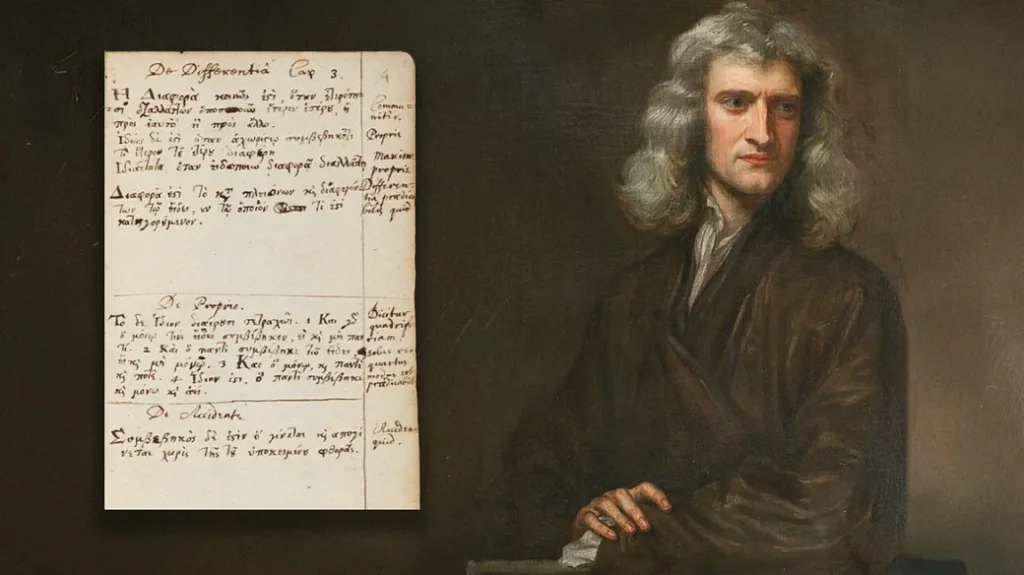
by Eugenia Manolidou I just read the article about Isaac Newton and his unknown notes in Greek. Newton, known for his contributions to science, had the ability to record his observations in the Greek language, a fact that demonstrates the importance of knowledge of classical languages at the time (Proto Thema, 2024). This may impress […]
Koine Greek

The Language That Conquered the World
Our Method

Innovative Approaches to teaching Ancient Greek: The experiential Method of Elliniki Agogi Learning Ancient Greek is often perceived as an arduous task, especially when taught through methods emphasizing rote memorization and grammar rules. However, for modern Greek speakers, particularly elementary school students, the journey to mastering Hellenistic Koine Greek can be surprisingly intuitive and rewarding. […]
The Fragile Future of Timeless Texts – Defending the Classics Against Disruption

by Eugenia Manolidou I recently read an article about the University of Exeter’s decision to include trigger warnings for students studying Homer’s Iliad and Odyssey. These warnings alert students to potentially “distressing” themes like infant mortality, sexual violence, and warfare. While the intention may be to shield students from discomfort, it left me questioning whether […]
Eiresione and Ayermoi: Ancient Traditions in Modern Greece

by Eugenia Manolidou The Eiresione (εἰρεσιώνη), the ancient reference to the adorned olive branch, and the Ayermoi (ἀγερμοί), the roots of today’s Christmas carols (kalanta), are two vivid examples of the enduring continuity of Greek culture. The Eiresione symbolizes prosperity, community, and a connection with nature, while the Ayermoi are associated with the sung wishes […]
A Living Lesson in History: The Discovery of Constantine Palaiologos’ Portrait

The recent discovery of the unique in vivo portrait of Constantine XI Palaiologos, the last emperor of Byzantium, in the katholikon of the Old Monastery of the Archangels in Aigialeia is an event of global significance for Greek history and culture.
Classical Education: An Idea That Can Revitalize Education in Greece

Η επαναφορά της κλασικής παιδείας ως η βάση για ένα εκπαιδευτικό σύστημα που να συνδέει τη γλώσσα και την ιστορία με τις ανάγκες του σύγχρονου κόσμου, καθιστώντας έτσι την Ελλάδα πρωτοπόρο στην ενίσχυση των ανθρωπιστικών σπουδών.