
By Eugenia Manolidou
As the Greek premiere of Christopher Nolan’s The Odyssey approaches, angry reactions from people who have not yet seen the film continue to multiply. The controversy has focused particularly on the casting of Lupita Nyong’o as Helen, prompting an international debate about the film’s casting choices. I admit that the choice surprised me too.
Homer does not give us a complete portrait of Helen, but he does offer a clear indication. In Book 3 of the Iliad, we read:
Ἶρις δ’ αὖθ’ Ἑλένῃ λευκωλένῳ ἄγγελος ἦλθεν.
Helen is described as leukōlenos, “white-armed.” This is a conventional Homeric epithet, associated with feminine beauty and elevated social status, rather than a modern racial classification. It nevertheless remains a descriptive indication that cannot simply be ignored. The Greek text and the meaning of the epithet can be verified in the Perseus Digital Library.
What surprised me even more was Nyong’o’s statement that she would ask Homer why he devoted so little space to women. She has acknowledged that, before joining the film, she knew virtually nothing about The Odyssey and underwent what she called a brief “crash course.” In her interview with Elle, she explained that she then read The Odyssey and listened to The Iliad. Later, when asked what she would say to Homer, she questioned the limited time he supposedly gave his female characters.
Yet it is difficult to read the epic and overlook Athena, who drives the action, Penelope, who forms its moral centre, or Circe, Calypso, Nausicaa, Arete, and Helen herself. Homer’s women cannot be measured by modern notions of “screen time,” but they determine the entire course of the poem. I would therefore suggest that Lupita Nyong’o watch the film in which she appears very carefully. She may then discover that Homer’s women were never absent.
Nolan’s film is, of course, a contemporary interpretation of The Odyssey, not a critical edition of the Homeric text. It may illuminate the original or distort it. We need not look far for parallels. Every year at Epidaurus, we see the tragedies of Aeschylus, Sophocles, and Euripides presented with additions, omissions, and all manner of directorial excess, often designed to provoke. Does any of this diminish the stature of Aeschylus or Euripides? Of course not. The production and its director are judged, not the value of the original.
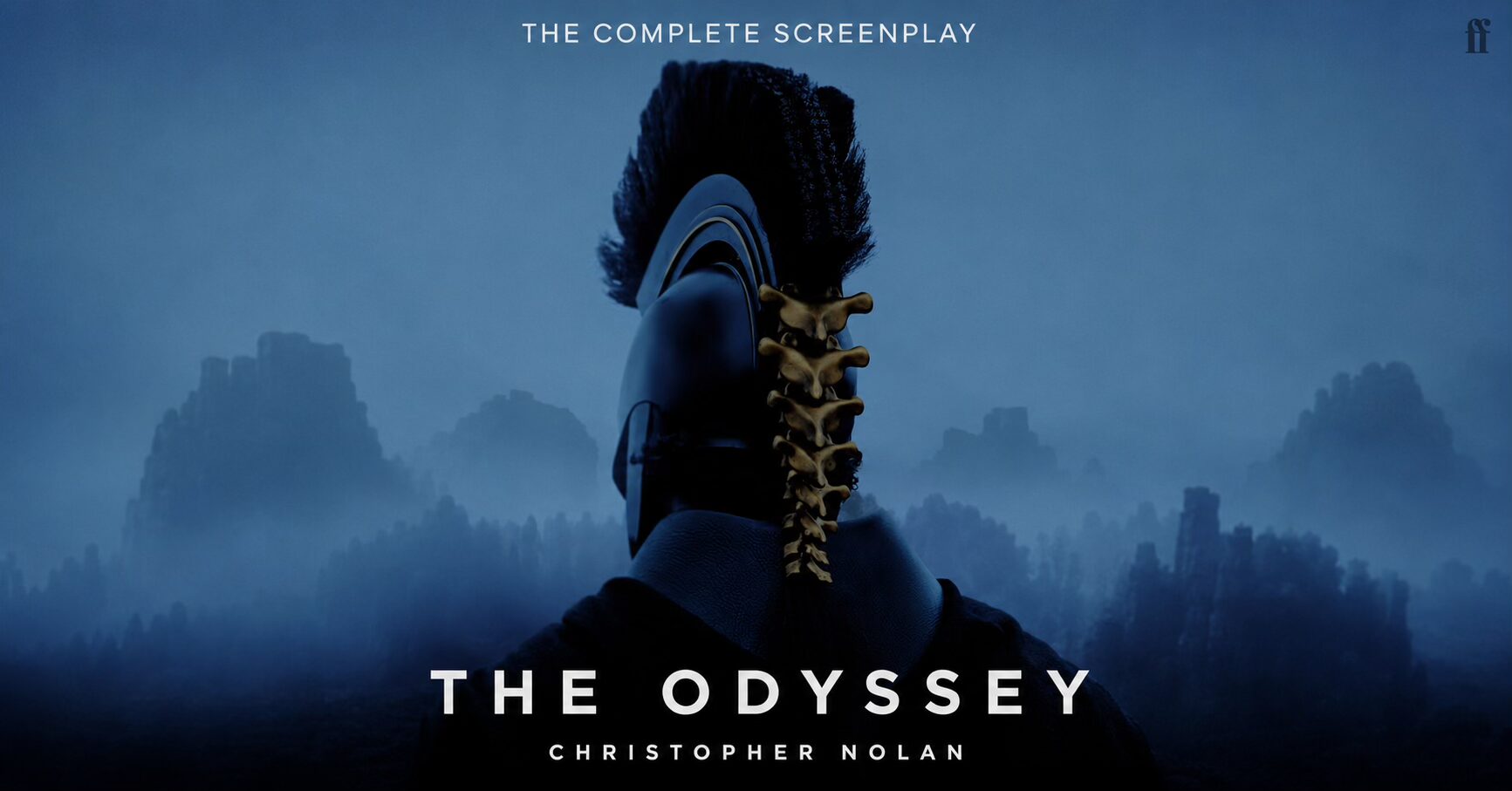
For precisely this reason, before dismissing the film, we should recognise the significance of the undertaking. Following Oppenheimer, one of the world’s leading directors chose to devote one of the largest cinematic productions of recent years to Homer. Naturally, I await with even greater interest the Greek production that will render The Odyssey more faithfully, more skilfully, and more impressively than Nolan. When it is made, I shall be among the first to see it.
Until then, millions of people will encounter Odysseus again, and many will seek out Homer’s text for the first time. Perhaps they will also recognise the absence of their own Ithaca, because in reading Homer we come to understand not only the ancient world, but ourselves more deeply.
The worldwide interest generated by the film also contains a striking irony. Only a few years ago, at the height of Cancel Culture, an American teacher declared that she was “very proud” to have helped remove The Odyssey from the curriculum. The incident was reported in The Wall Street Journal in December 2020. Today, tickets for a cinematic adaptation of the same epic are selling out before its release. I wonder what she would say about that.
Homer is not threatened by a cinematic adaptation. The real danger is that we may cease to read, experience, and interpret him. Let us therefore watch the film and judge it with knowledge, with reasoned arguments, and, above all, with Homer open beside us.